

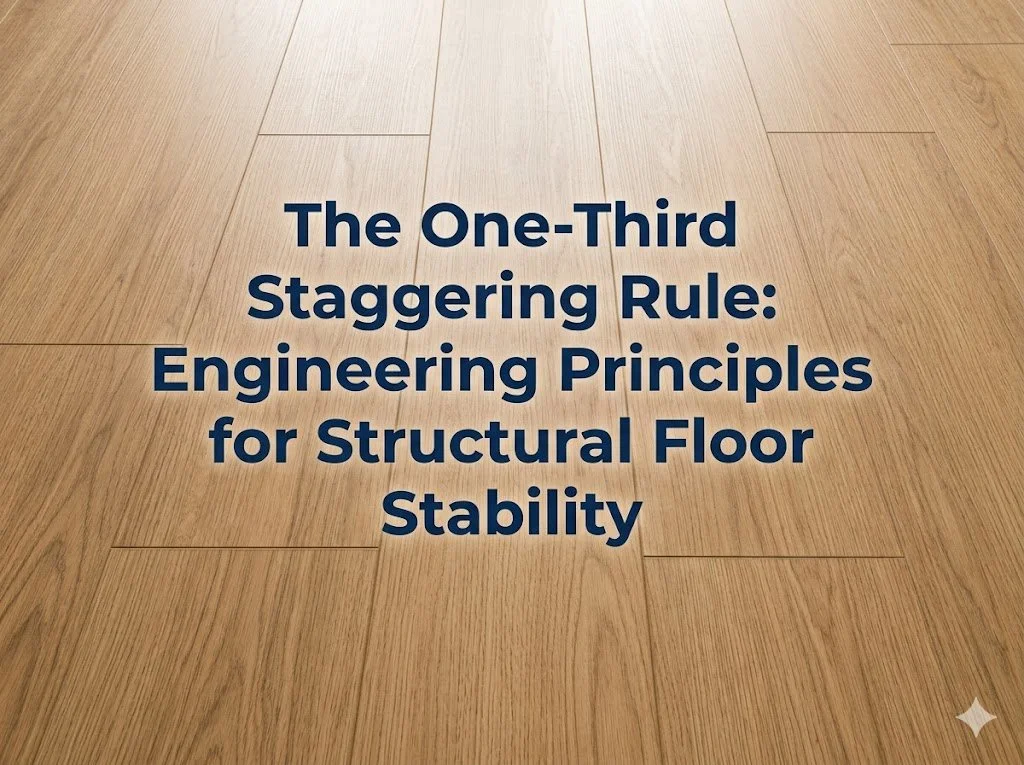
The One-Third Staggering Rule: Why Joint Offset Prevents Floor Failure in Tampa Bay
The one-third staggering rule offsets laminate joints by 30cm across three consecutive rows, distributing structural load across the entire floor. Poor stagger creates perforation lines that fail in Tampa Bay's wet season.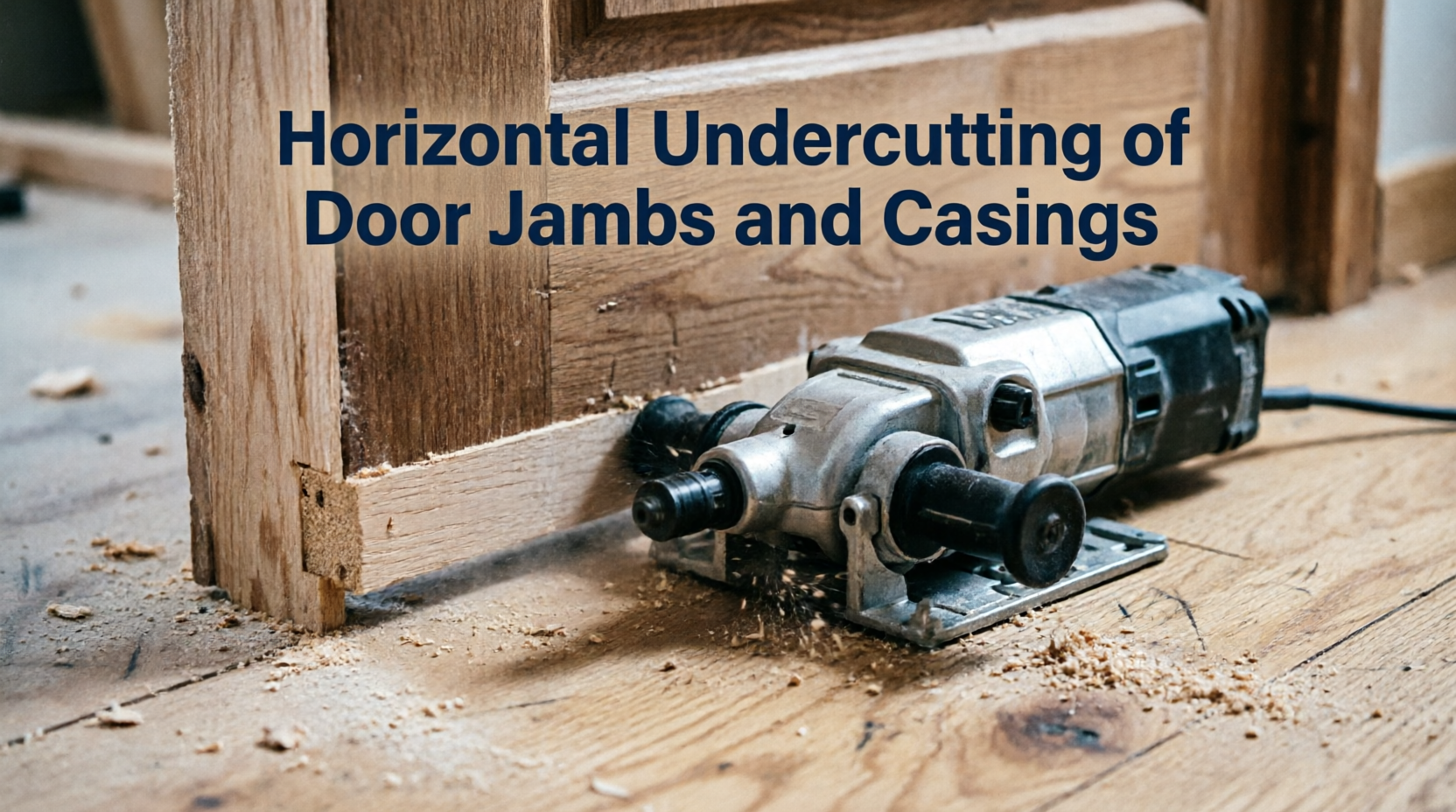
Why Professional Installers Undercut Door Jambs in Tampa Bay Homes
Professional laminate installation requires undercutting every fixed door jamb to preserve the 8–10mm expansion gap. Silicone patches signal a failed installation, not a finished one.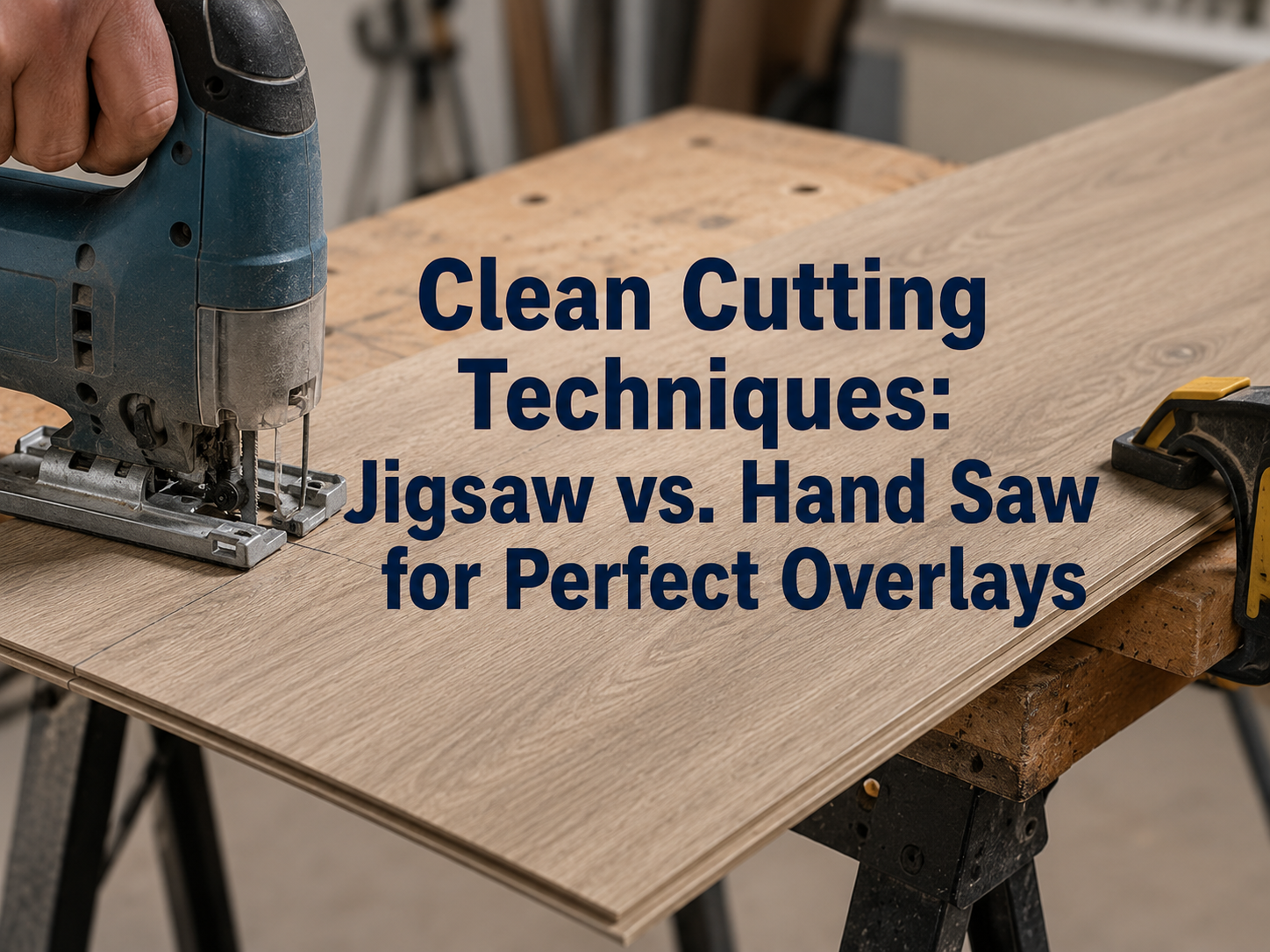
How to Cut Laminate Flooring Without Chipping: Jigsaw vs. Hand Saw Orientation in Tampa Bay Homes
Chip-free laminate cuts require Face Down orientation for power saws and Face Up for hand saws. Learn blade selection by TPI, the pipe clearance formula, and row balance calculations for Tampa Bay homes.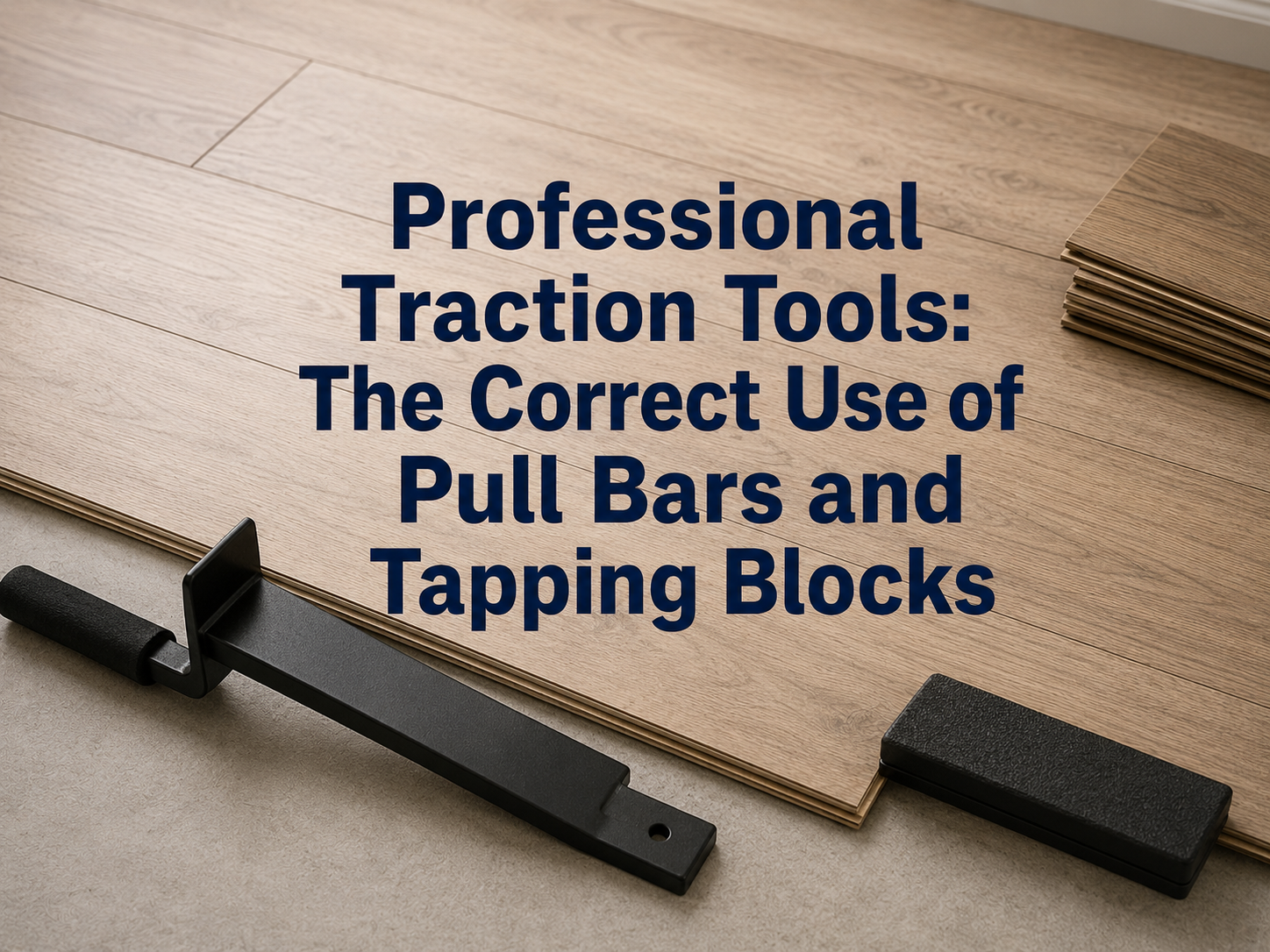
Pull Bars and Tapping Blocks: Why the Right Tool Protects Your Laminate Floor in Tampa Bay
Pull bars and tapping blocks are precision instruments — not interchangeable with scrap wood or steel hammers. Learn why nylon blocks and felt-backed pull bars protect HDF joints in Tampa Bay laminate installations.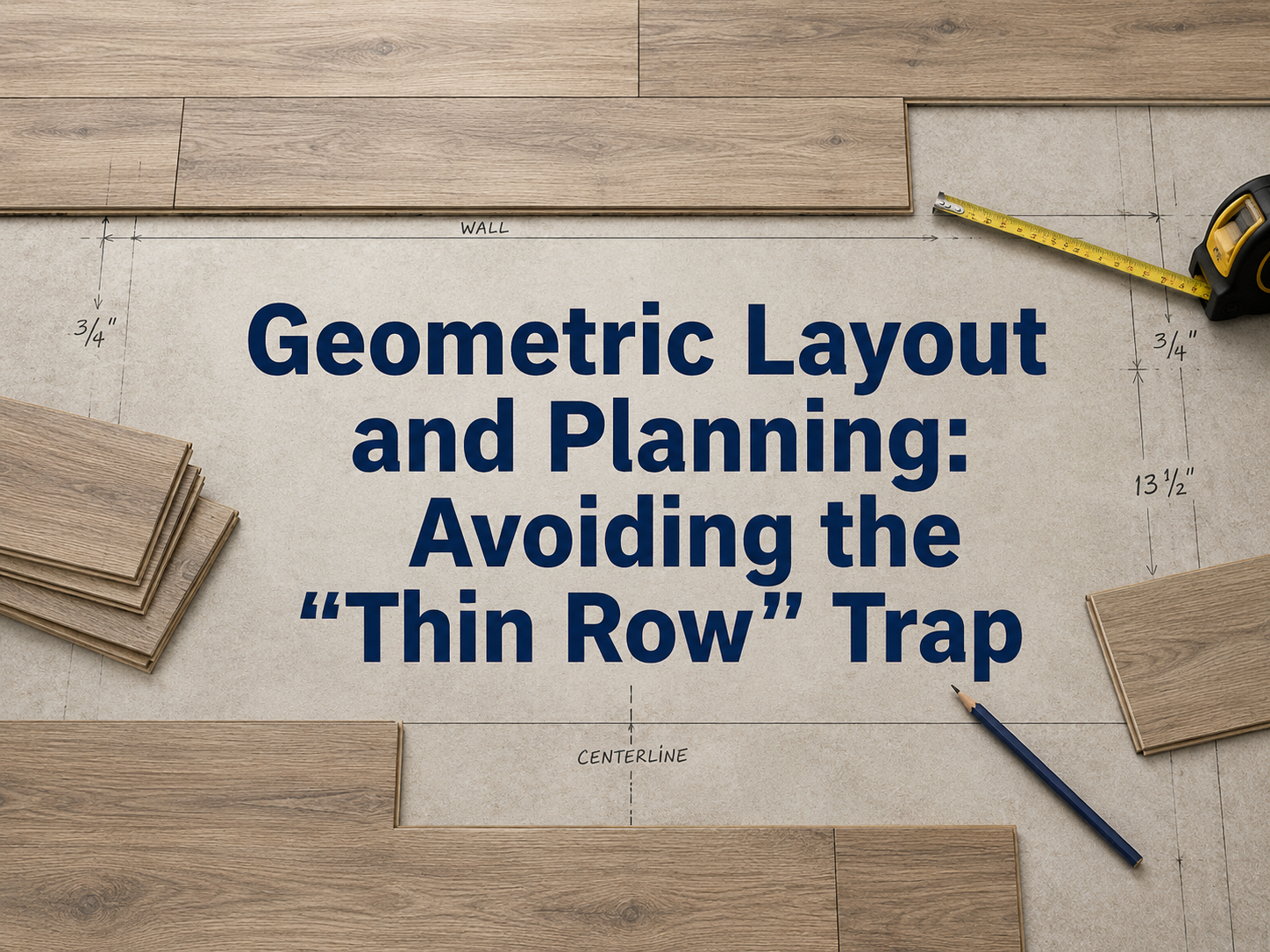
How to Calculate Flooring Row Widths and Avoid the Thin Row Trap in Tampa Bay Homes
A laminate final row narrower than 5cm is a structural failure point — not an aesthetic issue. Learn the Net Width formula and the split-the-difference adjustment for balanced layouts in Tampa Bay homes.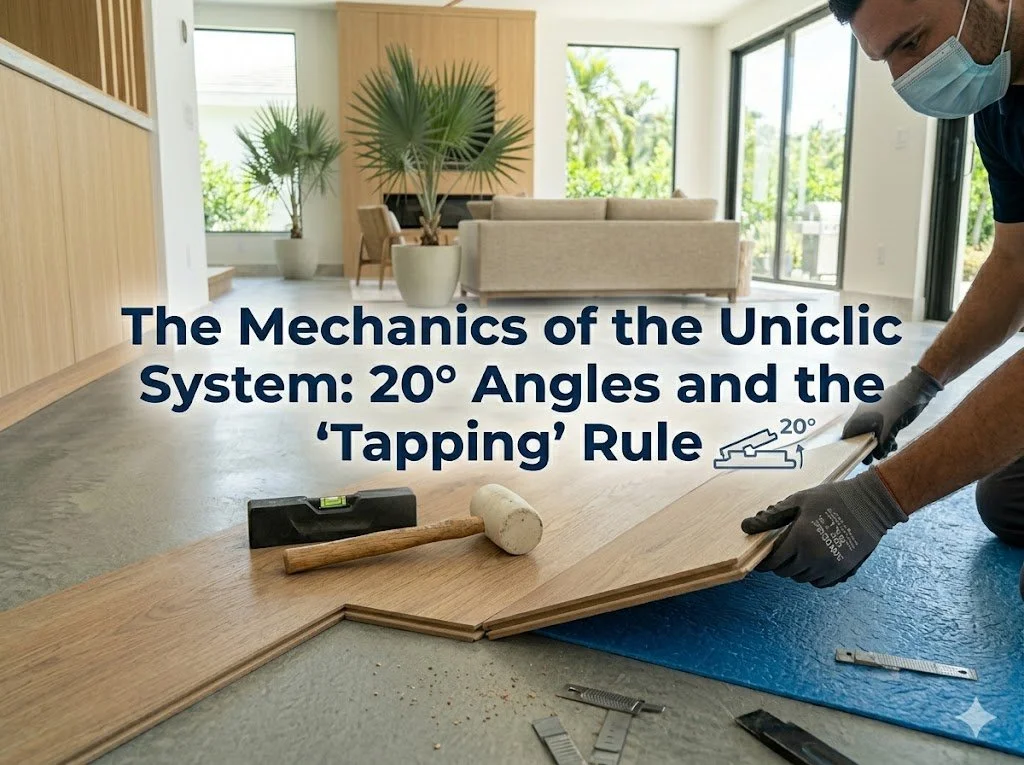
How the Uniclic System Works: The 20-Degree Angle and Tapping Rule for Laminate in Tampa Bay
The Uniclic system requires a 20–30 degree engagement angle for Method A and a certified tapping block for Method B. Using a hammer instead destroys joints invisibly. Learn both methods for Tampa Bay installations.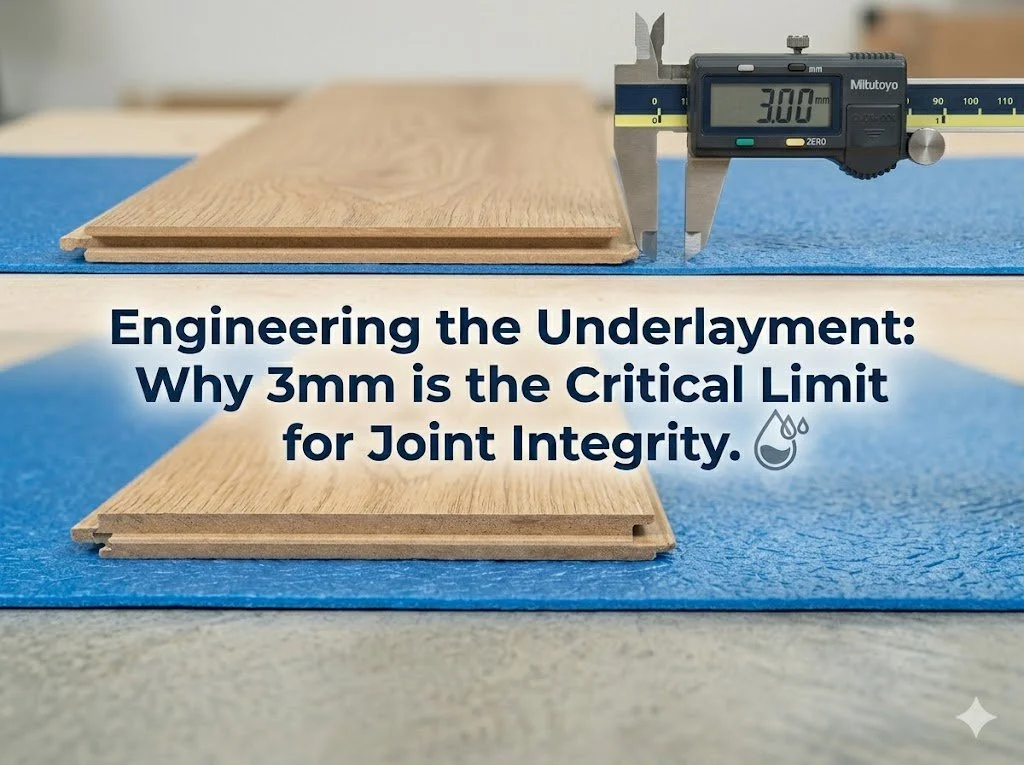
Why Underlayment Thickness Cannot Exceed 3mm for Laminate Flooring in Tampa Bay
Laminate underlayment cannot exceed 3mm and must meet 60 kPa compressive strength. Thicker foam destroys click joints in Tampa Bay homes — learn the engineering behind the limit.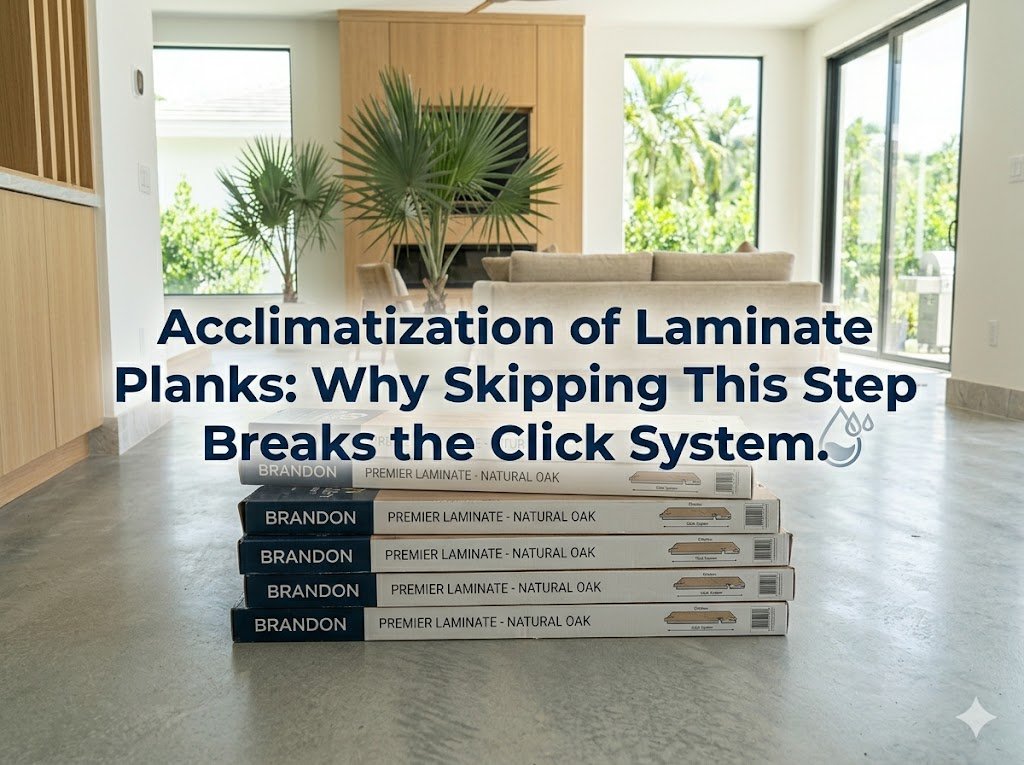
Why Laminate Flooring Must Acclimate 48–72 Hours Before Installation in Tampa Bay
Laminate flooring must acclimate 48–72 hours in the installation room before the first plank is placed. Skipping this step snaps Uniclic joints from the inside in Tampa Bay's humidity.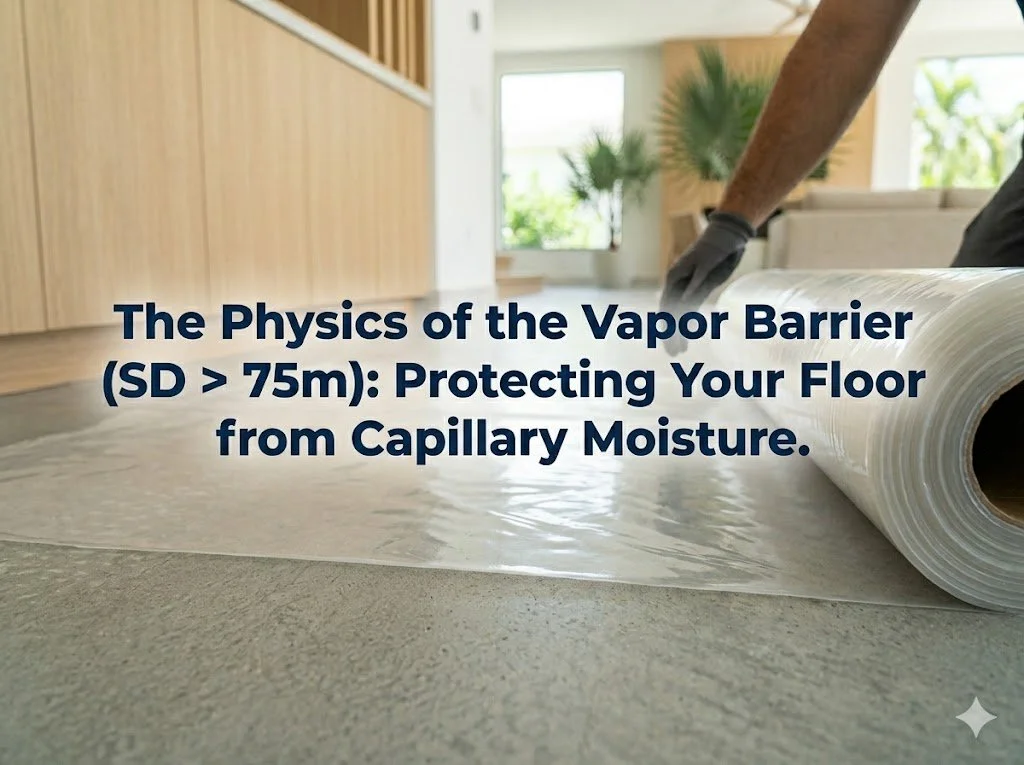
The Physics of the SD > 75m Vapor Barrier: Protecting Tampa Bay Floors from Capillary Moisture
Capillary moisture is a silent floor killer in Tampa Bay. Learn the physics of SD > 75m vapor barriers and how they protect your $5–9/sqft flooring.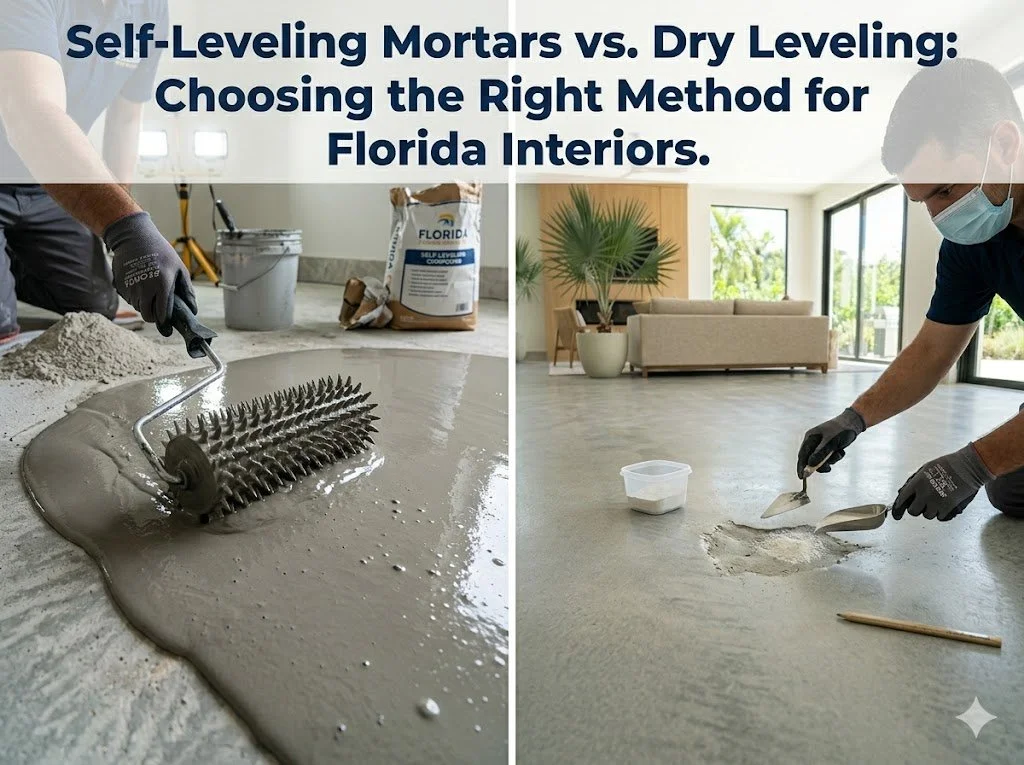
Self-Leveling Mortars vs. Dry Leveling: Choosing the Right Method for Florida Interiors
Pouring vs. filling: discover which leveling method suits your Tampa Bay subfloor and why a wrong choice leads to moisture traps and clicking joints.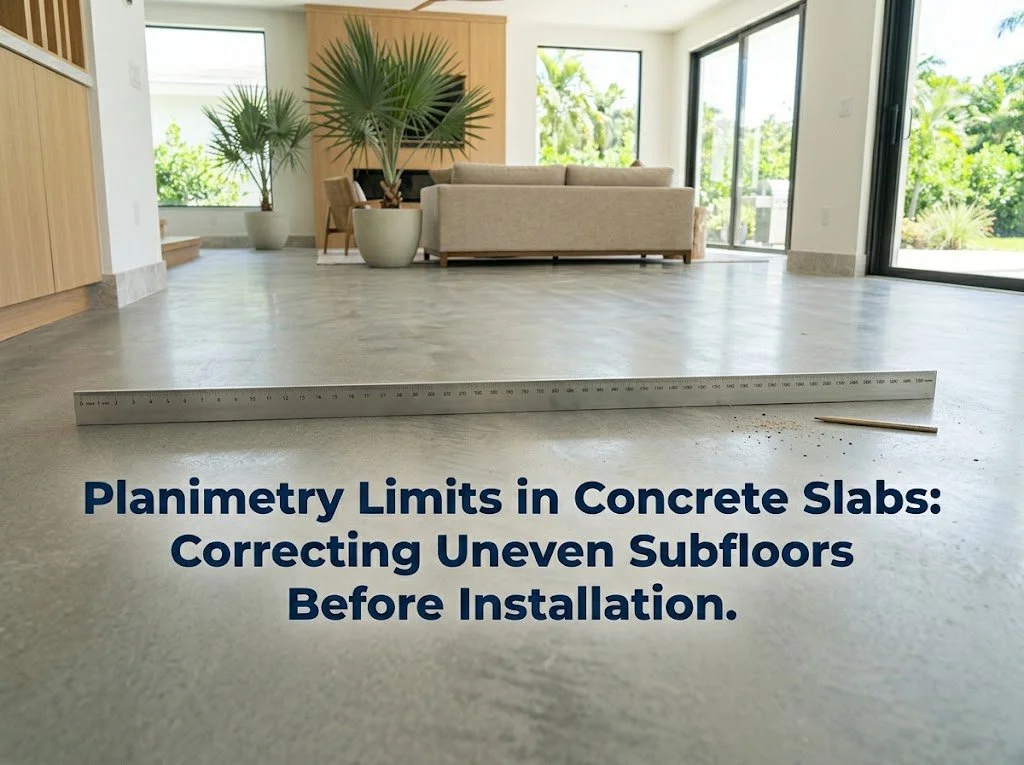
Planimetry Limits in Concrete Slabs: Correcting Uneven Subfloors Before Installation.
A wavy floor is a failing floor. Master the art of subfloor planimetry to protect your Tampa flooring investment from creaks and breaks.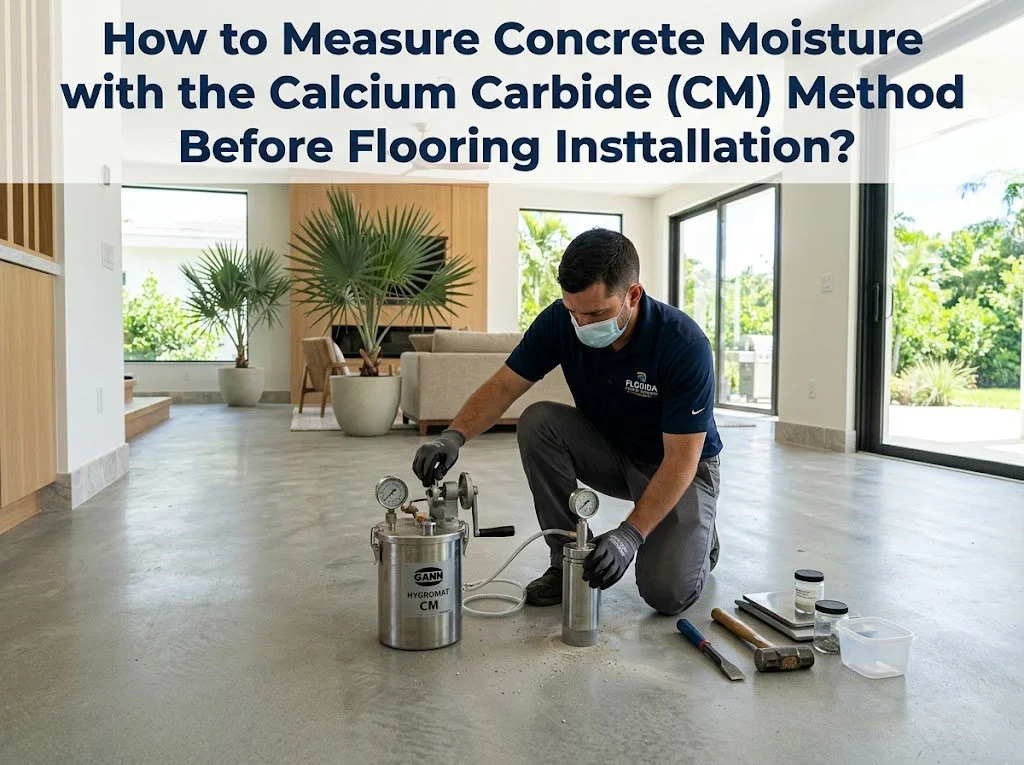
How to Measure Concrete Moisture with the Calcium Carbide (CM) Method Before Flooring Installation?
Moisture is the #1 floor killer in Tampa Bay. Discover how the professional CM test protects your $5-9/sqft investment from Florida’s high water table.
Click-Lock vs Glue-Down Installation in Tampa Bay: Pros, Cons, and What We Recommend
Click-lock and glue-down are the two main installation methods for LVP and laminate in Tampa Bay homes. One handles Florida's humidity better. One costs more. Here is the full comparison — with a clear recommendation for most residential projects.
Laminate on Concrete Slabs in Florida: The Moisture Barrier Mistakes We Fix Every Month
Laminate on a concrete slab in Florida requires a moisture barrier — no exceptions. Florida slabs retain ground moisture year-round. Without the right barrier, laminate buckles within months. Here are the mistakes we correct every month and how to avoid them.
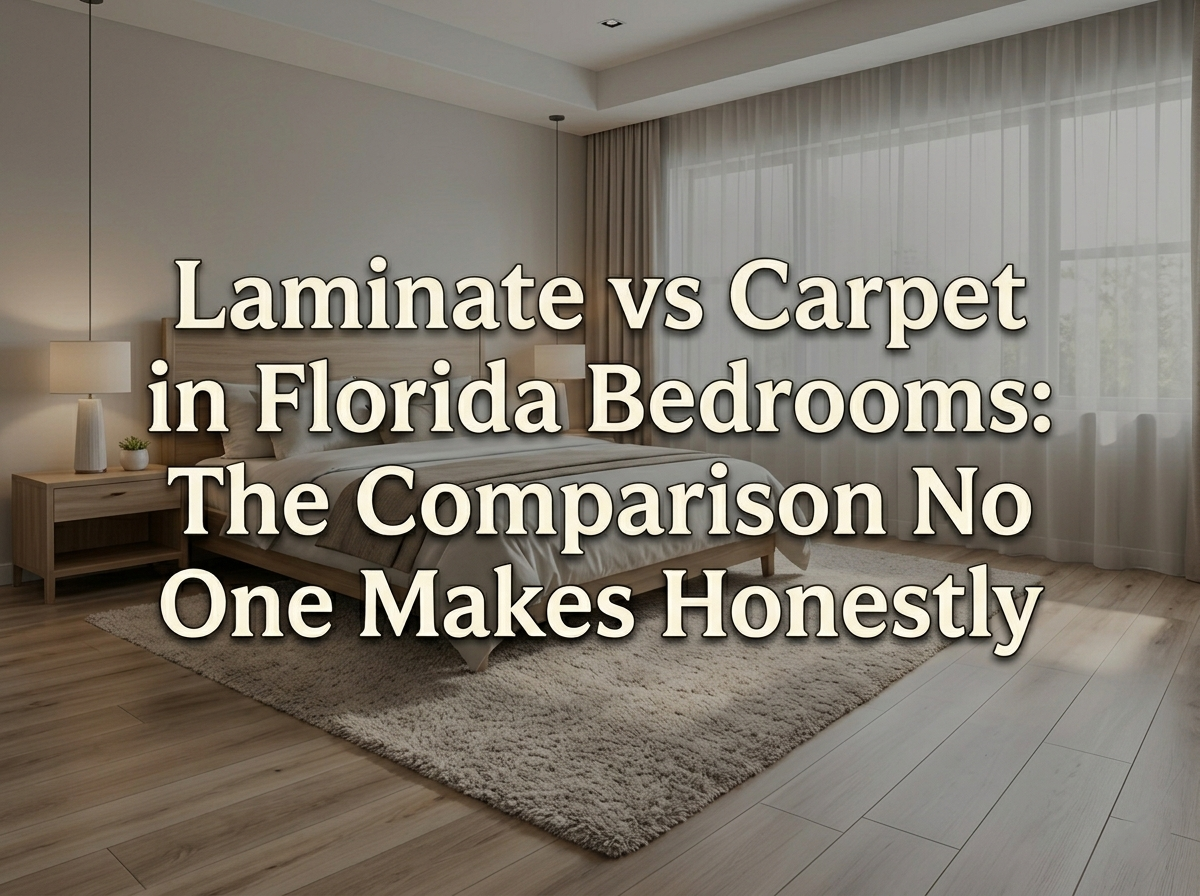
Laminate vs Carpet in Florida Bedrooms: The Comparison No One Makes Honestly
Carpet is still the most common bedroom flooring in Tampa Bay homes — and one of the most problematic for Florida's climate. Dust mites, humidity, allergens, and cost of ownership: here is the comparison that most flooring guides do not make honestly.

Salt Air, Sand, and Pets: Flooring for Tampa Bay Coastal and Pet-Heavy Homes
Tampa Bay homes near the coast deal with salt air and sand that accelerate floor wear. Add pets and the demands go even higher. Here is the honest breakdown of what survives — and what fails — in coastal and pet-heavy Florida homes.
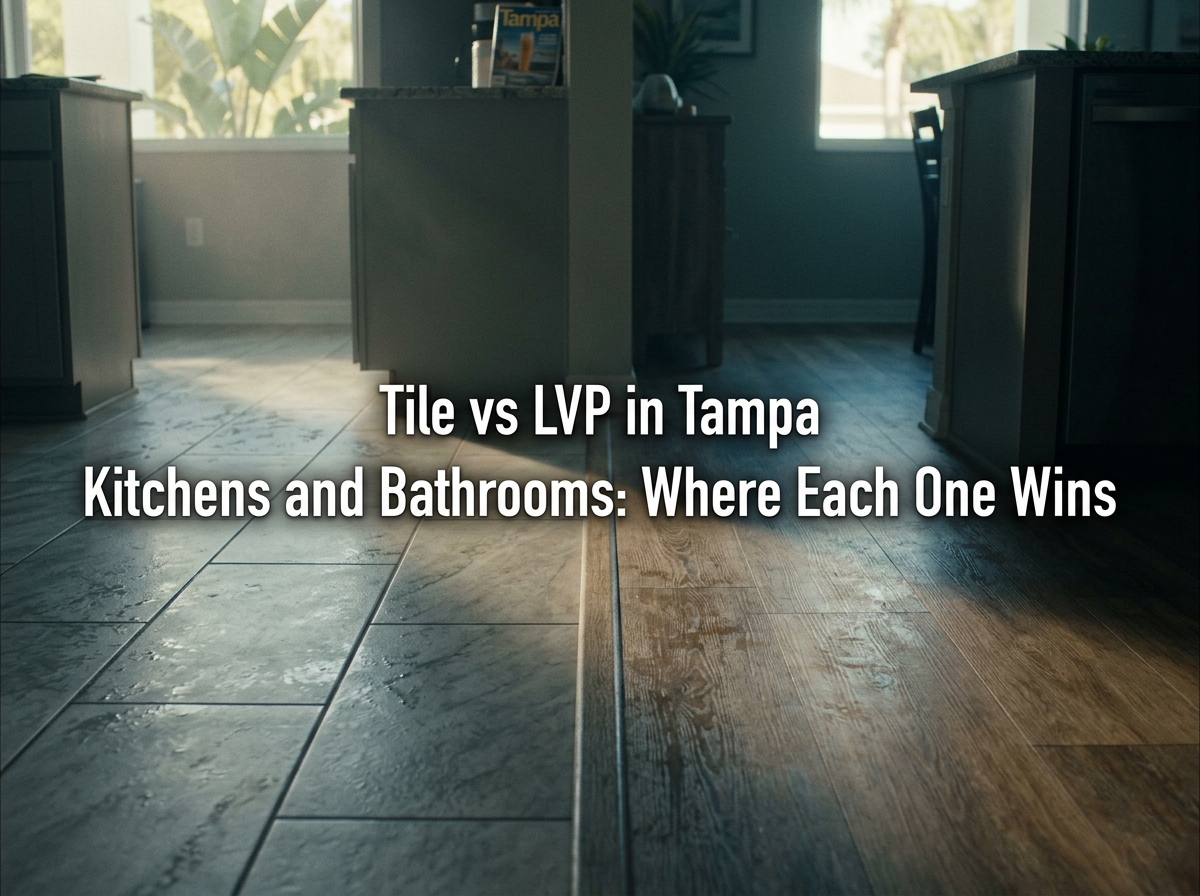
Tile vs LVP in Tampa Kitchens and Bathrooms: Where Each One Wins
Tile and LVP are both waterproof options for Tampa Bay kitchens and bathrooms. The real differences are cost, comfort, installation time, and how each performs in Florida's specific conditions. Here is the honest room-by-room breakdown.
After the Flood: What to Do with Your Floors in the First 72 Hours
When flooding hits a Tampa Bay home, the next 72 hours determine whether your floors can be saved or need full replacement. The material matters — and so does timing. Here is what to do first.
Which Vinyl Flooring Handles Florida Heat? The Comparison Tampa Bay Homeowners Need
Not all vinyl flooring is the same — and in Tampa Bay, the difference shows fast. One type stays rigid through Florida's heat, humidity, and AC cycling. The other is softer and cheaper, but can warp in the wrong space. Full breakdown with 2026 installed prices.
Why Your AC Is Damaging Your Floor — and How to Stop It
Tampa's air conditioning runs almost year-round. Most homeowners don't realize that constant AC cycling creates humidity fluctuations that warp, gap, and crack floors — even expensive ones. Here's what's happening and how to stop it.